What Did Vikings Trade Besides Weapons and Slaves?
Ask what Vikings traded and it is easy to picture a sword changing hands—or a captive being marched aboard a ship. Both belong to the history, but neither tells the whole story. Viking-age traders moved everyday necessities, luxury goods and raw materials across a network stretching from the North Atlantic to the markets of the Islamic world. Some cargoes were valuable because they were rare; others mattered because people needed them regularly.
Think instead of wool, iron, timber, furs, glass beads, honey, fish and silver. Add walrus ivory from the Arctic, and the picture widens further: Viking commerce was not simply a sideline to raiding, but part of a connected world of skilled production, long-distance travel and exchange.
A world connected by ships
The Viking age, usually dated from the late eighth to the mid-eleventh century, was not a single uniform period or one unified trading empire. Scandinavians travelled, settled and traded in different regions, and the goods they carried depended on local resources and changing routes. A trader in a Norwegian fjord did not necessarily deal in the same cargo as a merchant in Hedeby, Dublin or the Baltic.
Ships made those varied journeys possible. Their shallow draught allowed many vessels to travel along coasts and into rivers, while their sails and crews could cover much greater distances when conditions allowed. Ships also became part of the visual vocabulary through which we imagine Vikings: the long, narrow vessel with a high prow is instantly recognisable, even if real ships differed in size and purpose.
That striking image can make Viking travel look almost effortless. In reality, voyages depended on weather, navigation, repair, supplies and local knowledge. A ship could connect distant places, but it did not make distance disappear.
What filled the cargo hold?
Trade goods varied enormously. Many were ordinary products of farming and craft, while others travelled thousands of kilometres as precious commodities. The same item could have different values in different places: a material abundant in one region might be a coveted import elsewhere.
Goods Where they came from or how they were made Why they mattered Wool, cloth and hides Produced through animal husbandry and textile work Useful for clothing, sails and household goods; good-quality cloth could also be exchanged. Iron and metalwork Made from local or imported metal, then worked by smiths Needed for tools, fittings, domestic equipment and weapons alike. Glass beads and other ornaments Produced at workshops or brought along trade routes Portable, decorative objects that also reveal changing fashions and connections. Silver Arrived in coin, jewellery and hacked pieces of metal Could be weighed and divided, making it useful in exchange as well as display. Walrus ivory and other Arctic products Obtained through northern hunting and exchange networks Valued as a material for carving, particularly where elephant ivory was less accessible.The table is only a guide. Archaeologists find objects, not complete cargo lists, and a settlement’s finds do not always tell us whether an item was imported, locally made or passed on through several exchanges.
Walrus ivory: an Arctic material with far-reaching appeal
One of the most telling examples is the walrus ivory trade. Walrus tusks offered a hard, pale material that skilled craftspeople could carve. Ivory was used for objects such as gaming pieces, fittings and ornaments. It could travel far from the cold waters where walruses lived, linking northern communities with customers and workshops elsewhere.
This is one reason the phrase arctic products viking age deserves attention. Northern trade was not only about furs. It could include walrus ivory and other resources obtained in Arctic and sub-Arctic environments. Those goods point to people who understood local conditions and had the boats, skills and relationships needed to move products southward. The routes were not necessarily direct, nor should every northern object be assumed to have come through one tidy trading system.
Ivory also reminds us that “Viking trade” was not just a story about Scandinavian merchants buying and selling. It depended on the knowledge and labour of people in regions where the material was obtained, and on the craftspeople who turned a raw tusk into a finished object. A carved piece is the end of a chain of work, not a complete record of who performed each step.
Silver from the east—and why coins are clues, not receipts
Archaeologists have found large numbers of Islamic silver coins in Viking-age hoards and settlements. Searches for islamic silver coins viking often lead to discussions of dirhams: silver coins minted in regions governed by Islamic dynasties and carried along extensive trade networks. Finds in Scandinavia and around the Baltic show that silver from the east reached northern markets in significant quantities.
But a coin is not a little passport stamp. It does not, on its own, prove that the person who buried it had travelled to the place where it was minted. Coins could pass through many hands, be melted down, or circulate as silver by weight rather than at a fixed face value. Viking-age silver hoards also contain jewellery and cut pieces of metal, sometimes called hacksilver, showing that metal could be divided when a convenient coin was unavailable.
That makes silver a valuable historical clue, but one that needs interpretation. The patterns of coins, weights and other finds help researchers reconstruct connections; no single hoard explains an entire route.
Settlements, shields and the speed of storytelling
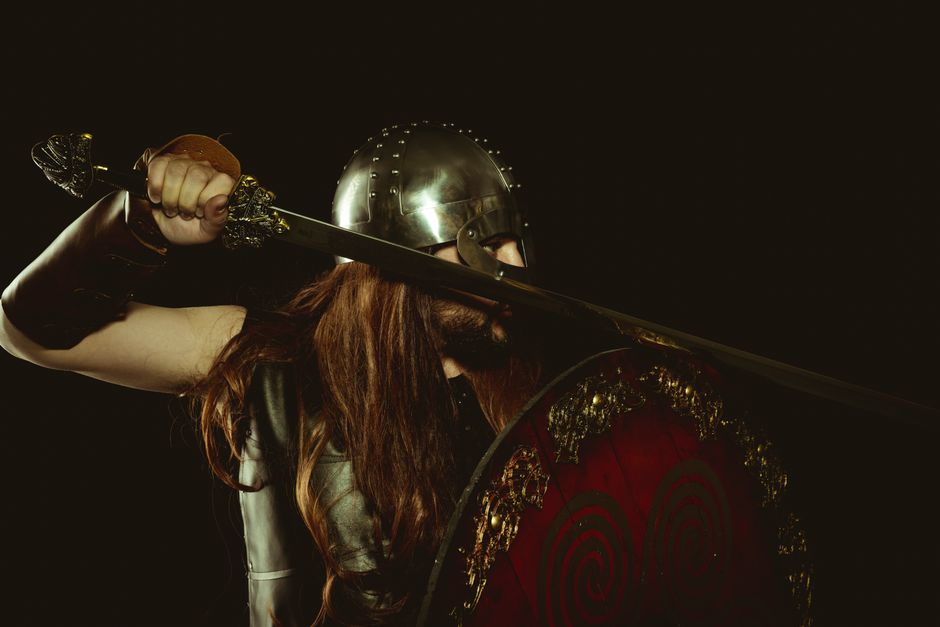
The visual vocabulary of popular Viking stories is powerful: ships on a grey sea, round shields along the gunwale, timber buildings and a busy trading settlement. These images help an audience orient itself quickly, but they can flatten a complicated past. A shield tells us something about how a character is being presented; it does not prove that every traveller carried one as part of a merchant’s everyday equipment. Nor did every settlement look like a dramatic waterfront market.
Games and films also establish places at very different speeds. A game may need to signal “Viking port” within seconds so a player knows where to go and what kind of activity to expect. It might combine a harbour, market stalls, ship sheds, a hall and defensive walls into one readable space. A film can use a wide shot, a few props and a quick exchange of dialogue to do much the same.
Real settlement history is slower. Archaeologists work from foundations, rubbish pits, workshops, imported objects and environmental evidence. They ask how a place changed over decades and centuries, rather than how quickly a viewer can recognise its setting. A trading centre might grow, decline, shift its focus or be linked to nearby farms and landing places. The cinematic port is a useful visual shorthand, not a full archaeological map.
This distinction matters whether someone’s introduction comes from a museum display, a history site such as HistoryMedieval, or a strategy game. Games and entertainment brands—including Mr Q and MrQ—belong to the modern world of play, not the evidence base for reconstructing Viking-age trade. Enjoying a vivid setting is perfectly compatible with asking which details are supported by finds and which are there to help the story move.

The horned helmet: why the myth sticks
The horned Viking helmet is one of history’s most durable visual shortcuts. It is also a poor guide to what Viking warriors actually wore. There is no good archaeological evidence that horned helmets were standard battle gear in the Viking age. Protruding horns would be awkward in a fight and easy to snag, which is not a helpful design feature for protective equipment.
So why does the image persist? Part of the answer lies in later art, theatre and costume design. Romantic depictions of Vikings turned them into dramatic figures from a distant, supposedly wild past. Horns made a costume unmistakable from the back row of a theatre or, later, across a cinema screen. Once the image became familiar, it was repeated in illustrations, advertising, games and fancy dress.
There may also be confusion with horned headgear from much earlier periods, including ceremonial objects not associated with Viking-age battle. Similar-looking shapes in art are not proof that warriors wore the same thing into combat. A memorable silhouette can outlive the evidence that contradicts it.
The Gjermundbu helmet: a useful reality check
The Gjermundbu helmet offers a welcome counterpoint. Found in Norway in a tenth-century grave, it is the most complete Viking-age helmet known from Scandinavia. Its iron construction includes a rounded cap and a protective framework for the face, with a nasal guard. It looks like practical protective equipment—not a set of antlers.
One helmet cannot tell us exactly what every person wore. The archaeological record is incomplete, and metal equipment could be reused or recycled. Still, Gjermundbu is a powerful reality check because it replaces a theatrical stereotype with an actual surviving object. It also reminds us that historical claims should be proportionate to the evidence: historymedieval.com one remarkable find is important, but it does not represent every region, rank or battle.
Beyond the familiar story
Weapons and enslavement belong in honest accounts of the Viking age, but they should not crowd out the trades that sustained households and connected communities. Wool, iron, silver, crafted ornaments, fish, hides and Arctic materials all formed part of a wider economic picture. Walrus ivory and Islamic silver coins are especially vivid reminders that northern societies were connected to distant markets and materials.
The next time a screen shows a ship arriving at a bustling settlement, enjoy the scene—but take a moment to look past the shields. Ask what is being unloaded, who made it, who gathered it, and how many hands it may have passed through. Those questions lead away from the stereotype and towards a richer history of work, exchange and travel.
Keep exploring
- Compare screen images with objects in museum collections, especially when a costume detail seems too familiar.
- Look at coin hoards as evidence of exchange, while remembering that coins could travel far beyond their place of minting.
- Use your browser’s Print Article option, including its PDF/print function, to save a copy for later reading.
- Use the Facebook share option if you would like to pass the article on to someone who enjoys Viking history.